


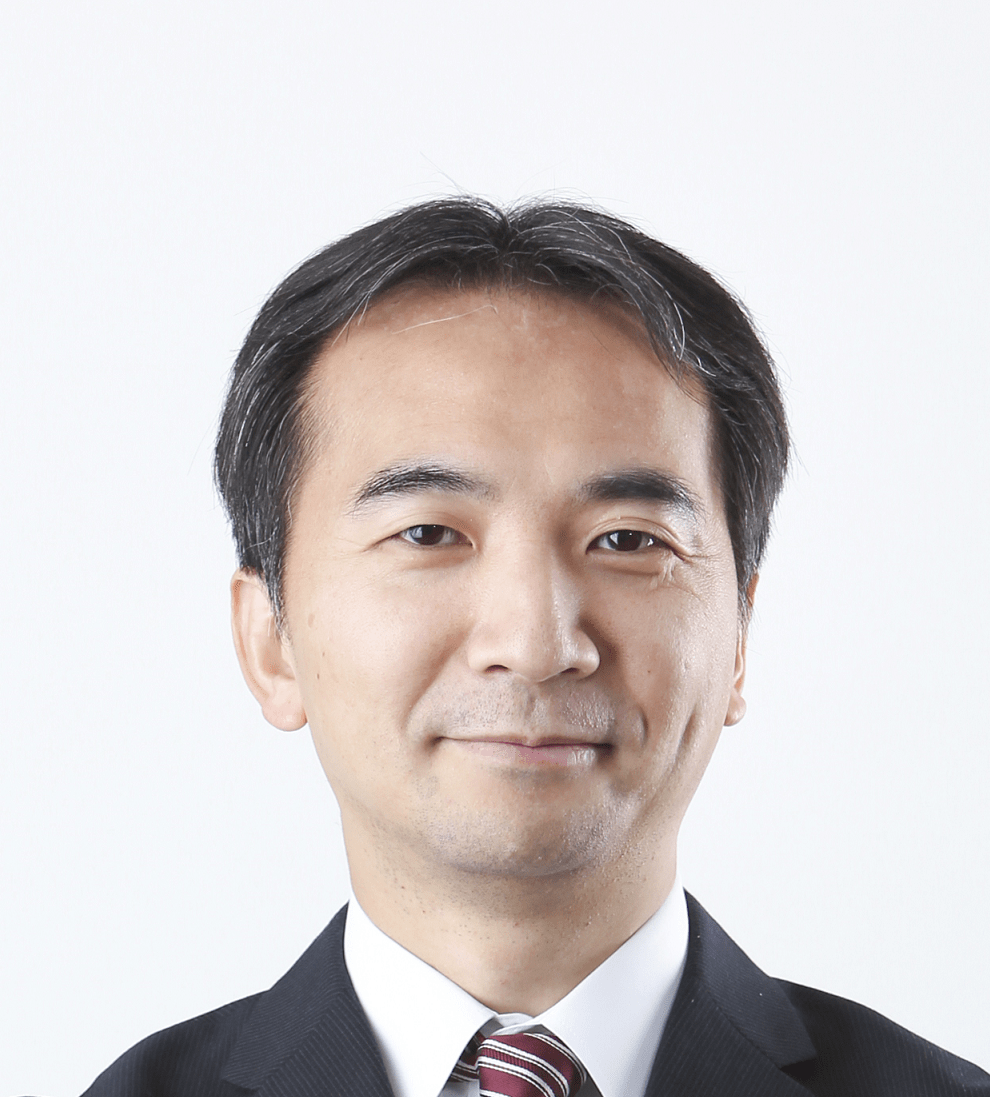
IEEE Computer Society 2025
President
Professor and Associate Dean of Research Promotion
Division
National Institute of Informatics, Visiting Professor
eXmotion, Outside Director. University of Human
Environments, Advisor
Bio: Hironori Washizaki is the 2025 IEEE Computer Society (CS) president. He is a professor and the associate dean of the Research Promotion Division at Waseda University. He is a visiting professor at the National Institute of Informatics and an advisor at the University of Human Environments. He also works in the industry as an outside director and advisor at eXmotion and SI&C. He has led professional and educational activities at the IEEE CS, including the evolution of the Guide to the Software Engineering Body of Knowledge (SWEBOK) and the CS Juniors program. He has led many academia-industry joint research and large-funded projects in systems and software requirements, design, reuse, quality assurance, and AI software engineering. He leads a professional IoT/AI/DX education project called “Smart SE.” Since 2015, he has been the convenor of ISO/IEC/JTC1/SC7/WG20 to standardize bodies of knowledge and certifications in systems and software engineering.
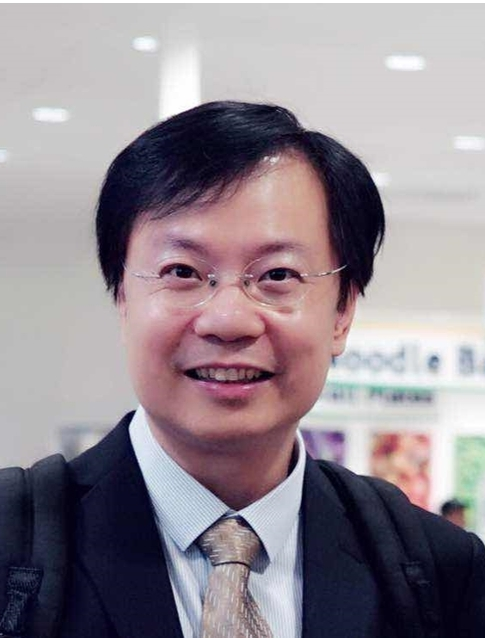
Fellow of IEEE, AAIS, AIIA,
and IET
Dean, College of Industry-Academia Innovation
Bio: Prof. Guo received
the Ph.D. degree from the Institute of Communication
Engineering, National Taiwan University, Taipei, Taiwan,
in 2004. He is currently a full Professor with the
Department of Electrical Engineering, and Director of
Advanced Intelligent Image and Vision Technology
Research Center. He has been seconded as Chief
Technology Officer to Service Systems Technology Center
and Information and Communications Research Laboratories
of Industrial Technology Research Institute (ITRI)
starting from 2022 and 2023, respectively. He was Vice
Dean of the College of Electrical Engineering and
Computer Science, and Director of the Innovative
Business Incubation Center, Office of Research and
Development. His research interests include multimedia
signal processing, biometrics, computer vision, and
digital halftoning.
Dr. Guo has received many awards, including Best Paper
Awards (IEEE ICCE-TW 2020, IS3C 2020, NSSSE 2020, ICSSE
2011 and 2020, ICS 2014, and CVGIP 2005, 2006, 2013,
2016, and 2019), Outstanding Contribution Award from
Taiwan Consumer Electronics Society in 2021, Outstanding
Electrical Engineering Professor Award from Chinese
Institute of Electrical Engineering, Taiwan in 2016,
Outstanding Research Contribution Award from Institute
of System Engineering in 2017, Excellence Research
Awards from his university for five times (2008, 2011,
2014, 2017, 2020, and 2022, this award is evaluated and
issued every three years).
Dr. Guo has been General Chair of many international
conferences, e.g., IEEE ICCE 2025, APSIPA 2023, IEEE
Life Science Workshop 2020, ISPACS 2019, IEEE
ICCE-Berlin 2019, IWAIT 2018, and IEEE ICCE-TW 2015. He
has been Technical Program Chair of many international
conferences as well, e.g., IEEE ICIP 2023, IWAIT 2022,
IEEE ICCE-TW 2014, IEEE ISCE 2013, and ISPACS 2012. He
is/was Associate Editor of the IEEE Transactions on
Image Processing, IEEE Transactions on Circuits and
Systems for Video Technologies, IEEE Transactions on
Multimedia, IEEE Signal Processing Letters, Information
Sciences, Signal Processing, and Journal of Information
Science and Engineering. He is a Fellow of IEEE, AAIS,
AIIA, and IET.
Speech Title: From Generative
AI to Physical AI: Bridging Intelligence and the
Physical World
Abstract: This keynote explores the paradigm
shift from Generative AI toward Agentic and Physical AI,
highlighting how digital intelligence is increasingly
extending into and interacting with the physical world.
It reviews the evolution of AI technologies and key
challenges, including hallucination, bias, computational
complexity, and resource demands, together with emerging
solutions such as Retrieval-Augmented Generation (RAG),
reasoning-based learning, and efficient AI models.
Through cross-domain case studies, the talk demonstrates
how AI can enhance industrial efficiency, automate
enterprise processes, and support smart healthcare
applications such as medical report generation and
AI-assisted diagnosis. Looking beyond content
generation, the talk further explores the convergence of
multimodal perception, spatial intelligence, world
models, agentic AI, and robotics, enabling AI systems to
perceive, reason, act, and learn from real-world
feedback. This evolution toward Physical AI establishes
a closed-loop intelligence framework that bridges the
digital and physical worlds, paving the way for more
adaptive, resilient, and impactful AI applications
across industries.
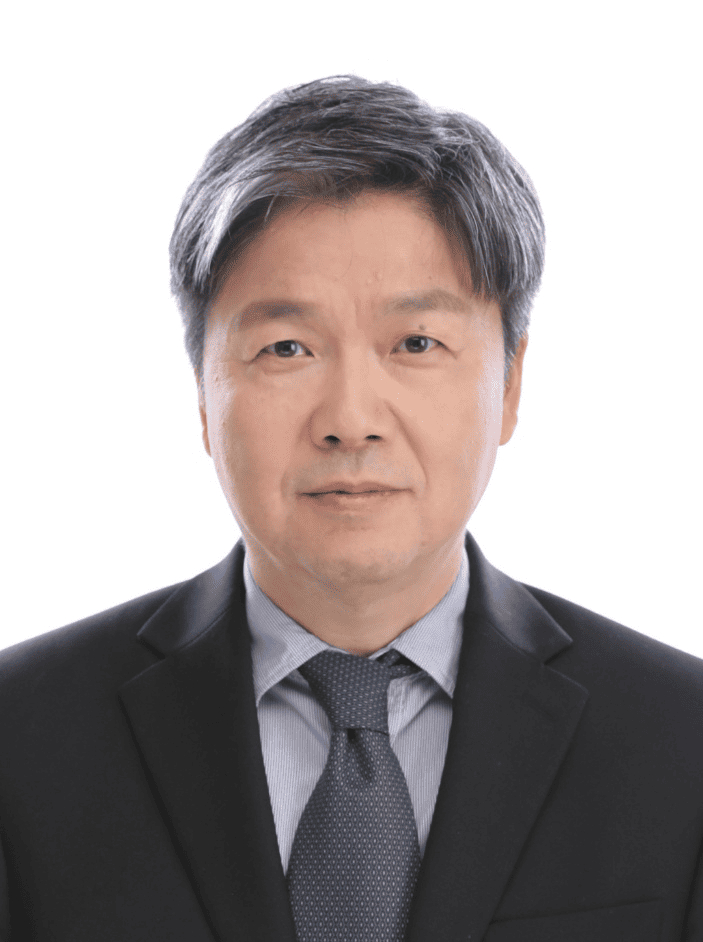
Director of Inter-university Semiconductor
Bio: Dr. Hyuk-Jae Lee received the B.S. and
M.S. degrees in Electronics Engineering from Seoul
National University (SNU), Seoul, South Korea, in
1987 and 1989, respectively, and the Ph.D. degree in
electrical and computer engineering from Purdue
University, West Lafayette, IN, USA, in 1996. From
1996 to 1998, he was an Assistant Professor with the
Department of Computer Science, Louisiana Tech
University, Ruston, LA, USA. From 1998 to 2001, he
was a Senior Component Design Engineer at Intel
Corporation, Hillsboro, OR, USA. In 2001, he joined
the School of Electrical Engineering and Computer
Science, Seoul National University, where he is
currently a Professor. He has been serving as an
Independent Director of Samsung Electronics since
March 2025, contributing to strategic guidance on
system semiconductors and advanced technology
innovation. Since June 2024, he has also been the
Director of the Inter-university Semiconductor
Research Center at SNU, leading national-level
collaboration in next-generation AI semiconductor
R&D.
His current research interests include
energy-efficient computer architectures, AI-centric
memory systems such as PIM and CXL-based
disaggregated memory, deep learning accelerators,
and heterogeneous SoC design for multimedia and
large AI model workloads. He has published over 300
papers and holds numerous patents in these areas. He
has led multiple major government and
industry-funded R&D programs and has been actively
engaged in semiconductor policy development and
strategic advisory roles in South Korea.
Speech Title: Semiconductor Innovations for AI: Toward a Memory-Centric Computing Paradigm
Abstract: The rapid advancement of Artificial Intelligence (AI) has significantly increased computational complexity and power consumption, pushing traditional von Neumann architectures toward fundamental limitations. Modern AI workloads, particularly generative models, exhibit memory-bound characteristics in which data movement between processors and memory dominates latency and energy usage. As semiconductor scaling slows near the 7-nm technology node and chip development costs rise, architectural innovation has become a key driver of system performance improvement. This presentation discusses the global competition in AI semiconductor technologies that increasingly seek compute sovereignty through in-house AI chip development. It further highlights the critical role of memory technology, as high-bandwidth data access emerges as the primary performance bottleneck. Advanced memory solutions such as High Bandwidth Memory (HBM), Processing-in-Memory (PIM), and Compute Express Link (CXL) are introduced as promising approaches to overcome von Neumann bottlenecks. Recent developments including HBM4 base-die compute integration, DRAM-embedded PIM accelerators, and CXL-based memory expansion demonstrate the shift toward a memory-centric computing paradigm. By examining these technology trends and industry dynamics, this work underscores the strategic importance of AI-memory innovation and explores opportunities to lead in the emerging era of memory-driven AI compute.